
Grey Impact Screens: Meaningful or Marketing?
At SimCaddy, we bring a professional AV perspective to every golf simulator project. We have always believed that a great simulator experience depends just as much on image quality as it does on tracking accuracy. That is why we took notice when both Carl’s Place and The Indoor Golf Shop announced in April 2025 that they would begin offering grey impact screens for golf simulators.
This development signals a potential shift in how we think about projection in simulator spaces. Grey screens have long been used in the AV industry to enhance image contrast in environments with ambient light. Now, for the first time, that same principle is being applied to golf impact screens, materials that must also handle the physical impact of high-speed golf shots.
Screen Colour and Contrast
Traditional golf simulator screens are bright white, which can make the image appear bright and vivid, especially in dark rooms. However, in spaces where ambient light is present, such as basements with pot lights, garages, or commercial facilities with windows or overhead fixtures, white screens can reflect not only the projected image but also surrounding light. That reflection often causes the image to appear washed out and low in contrast.
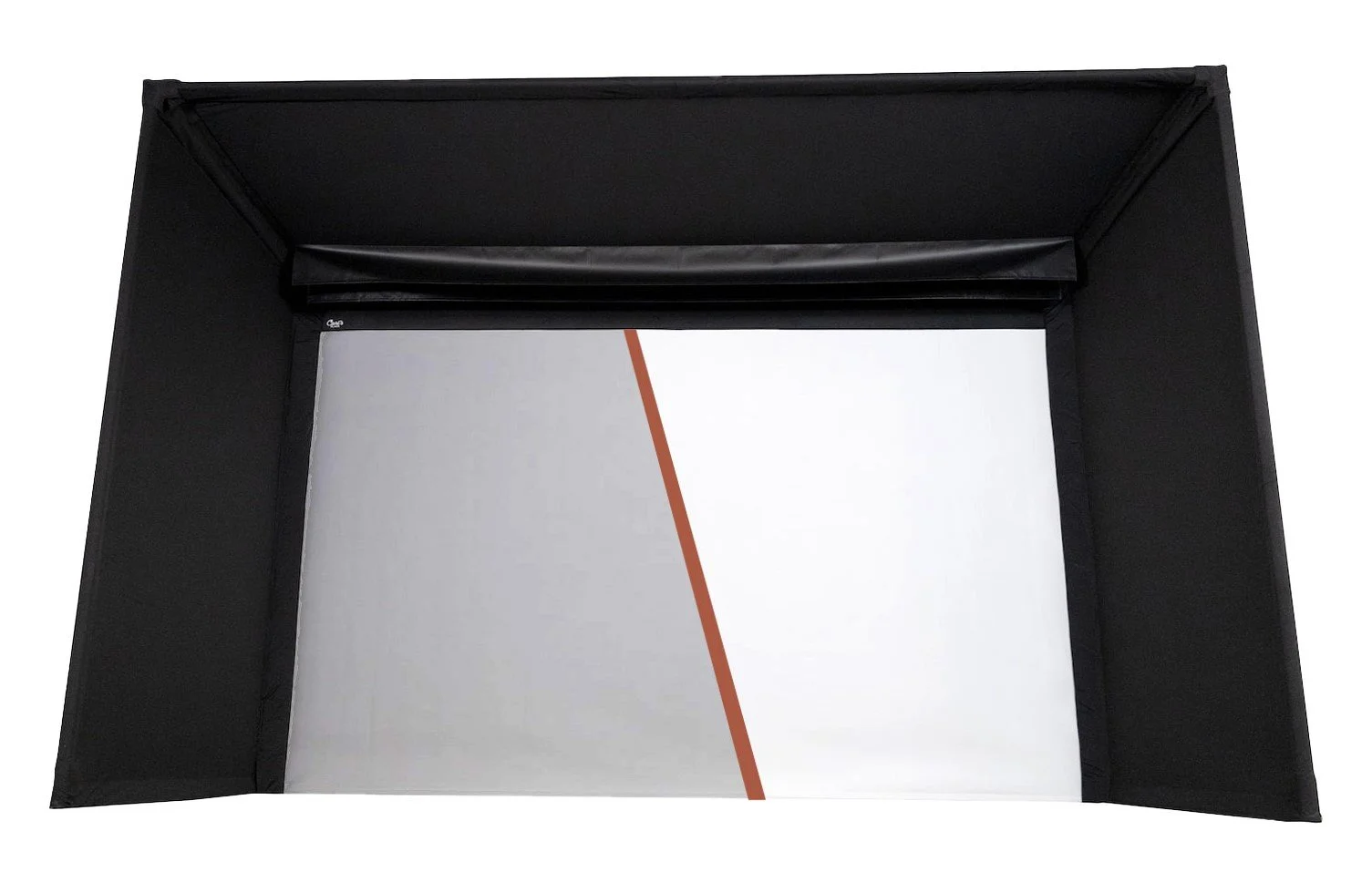
Grey impact screens are now available for golf simulators but are they a real visual upgrade or just marketing? Photo Credit: Carl's Place
Grey screens are designed to absorb more ambient light, which can deepen black levels and improve perceived contrast. In theory, this can lead to a more immersive and visually balanced image without needing to dim the room or upgrade the projector.
A Nod to the Silver Screen
This is not a new concept. In the early days of cinema, projection screens were coated with metallic silver to reflect more light and increase contrast for early projectors that lacked brightness. That is where the term “silver screen” originated. The goal back then was the same as it is now, to enhance image quality by optimising the screen material. The move toward grey screens in golf simulators builds on that same logic.
The Reality of Screen Materials in Golf Simulators
Here is the critical difference: golf impact screens are nothing like home theatre screens. While home cinema screens use finely tensioned fabrics made to reflect images precisely, golf screens must absorb the full impact of a golf ball travelling in excess of 100 miles per hour. At SimCaddy, we work with multi-layered, durable fabrics such as the premium triple-layer screens from Carl’s Place. These are thick, soft, and built for safety and longevity, not just image quality.
These fabrics are designed to minimise bounce back and drop the ball softly to the floor. That performance comes at a cost to absolute image precision, and that is okay. With golf simulators, you are always balancing multiple priorities: image clarity, safety, sound absorption, and durability.
How Much Can the Eye Really See?
While the science behind grey screens is sound, one important question remains: how much of a difference can the human eye actually perceive between a grey screen and a white one? This becomes especially relevant in golf simulators, where projector quality, screen material, and ambient lighting conditions can vary significantly from one setup to another.
In environments where ambient light is difficult or impossible to control, such as rooms with windows, overhead lighting, or reflective surfaces, a grey screen can noticeably improve perceived contrast and black levels. This is because grey screens absorb more ambient light than white screens, helping the projected image appear deeper and more vivid.
However, in rooms where lighting can be fully controlled, a high-quality white screen remains the standard. White screens typically reflect more light, producing brighter images when paired with a powerful projector and a darkened environment.
Ultimately, the choice between grey and white screens depends less on screen color alone and more on how much ambient light is present—and whether you can control it.
Projector Technology Has Improved
It is also important to acknowledge that modern projectors have come a long way. Today’s models offer higher brightness levels, improved contrast ratios, and features that help compensate for ambient light. Some projectors are even designed specifically for golf simulation, allowing them to perform well in less-than-ideal lighting conditions.
Given these advancements, it is fair to ask whether grey screens represent a true visual breakthrough or more of a targeted marketing trend. The answer depends on your space, your projector, and your expectations. Grey screens can certainly enhance contrast in rooms with ambient light, but ultimately, creating a space that feels natural and comfortable should be the top priority. The availability of grey screens adds another instrument to help achieve that goal in your design.
No Screen is Perfect, but Choice Matters
At present, there is no impact screen available that delivers a perfect projected image. That is not a flaw, it is simply a result of what these screens are designed to do. They are built to safely stop golf balls, not to act as flawless theatre displays. However, with the right settings and environmental adjustments, you can still achieve an impressive, high-quality image.
What matters is that simulator owners now have more choice. The option between white and grey screen materials allows users to tailor their setup to their own room conditions. The amount of ambient light, the projector being used, and expectations for picture quality all play a role. Choosing a projector or a screen is not just about the technical specifications, it is just as much about understanding the space you are building in.
Final Thoughts
At SimCaddy, we welcome innovation in the golf simulator industry, especially when it overlaps with our background in AV systems. The science behind grey screens suggests potential benefits in certain scenarios. If you are considering building a new golf simulator or upgrading your current system and wondering if a grey impact screen is right for you, we are happy to help. Our goal is simple: to help you make informed, confident decisions based on the characteristics of your space and what matters most to your simulator experience.