From Simulator to St. Andrews
How My Golf Simulator Helped Prepare Me for the Unpredictable Reality of Links Golf in Scotland
There are golf trips, and then there are golf pilgrimages.
Our recent journey to Scotland felt like the latter.
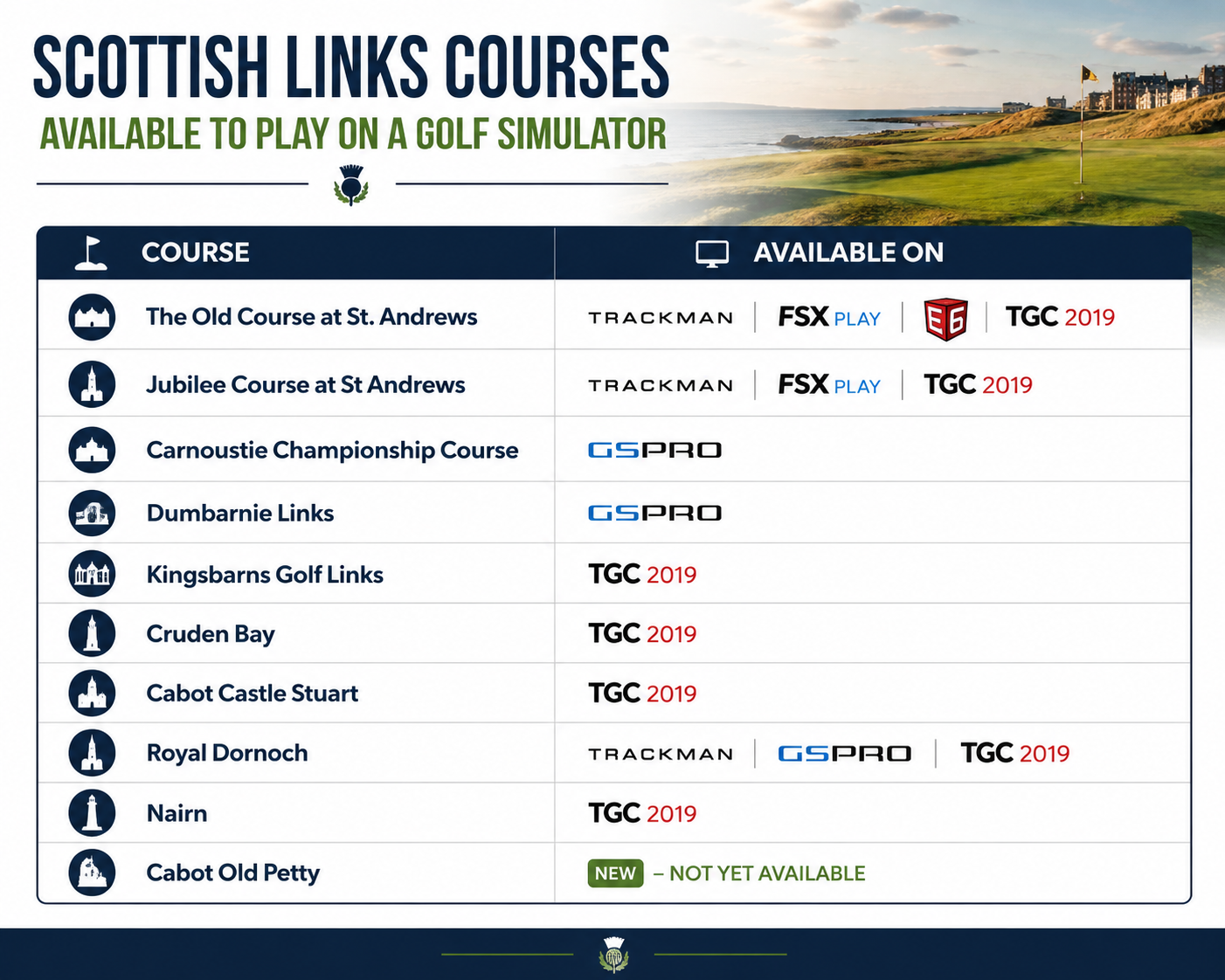
Twelve of us traveled overseas to experience some of the most historic and respected golf courses in the world, including the Old Course at St Andrews, the Jubilee course, Carnoustie, Dumbarnie, Kingsbarns, Cruden Bay, Castle Stuart, Royal Dornoch, Nairn, and the new Old Petty at Cabot Highlands.
For years, I had dreamed about playing these courses. But unlike many golfers making their first trip to Scotland, I arrived with a unique advantage.
I already knew many of the holes.
Not from previous visits, but from my golf simulator.
Throughout the winter, I had played many of these courses virtually. At different points during the offseason, I was playing the Old Course at St Andrews almost weekly.
And surprisingly, that familiarity mattered.
When I finally stood on the opening tee at the Old Course, I was not overwhelmed by the course or the moment. I felt prepared. I already understood the strategy, the sightlines, the shared fairways, and the areas where trouble could appear. Months of simulator golf had allowed me to mentally experience the course long before I ever stepped onto the property.
The first tee shot at St Andrews is intimidating because of what it represents: the history, the magnitude, and the realization that you are standing at the birthplace of the game itself.
I had thought about that opening shot for weeks.
What club would I hit? What conditions would I face? Would I be nervous?
But once I arrived and settled in beside the first tee, something unexpected happened.
I felt calm.
My caddie, Jamie, gave me a line slightly left. I trusted it, hit driver exactly where he suggested, and suddenly I was walking the most famous golf course in the world.
That comfort level came, at least in part, from simulator golf.
The Reality of Scottish Links Golf
Scotland quickly reminded me of something equally important.
Indoor golf and real links golf are two completely different experiences.
We had mentally prepared ourselves for every type of weather Scotland could throw at us: heavy winds, constant threat of rain, cold mornings, sideways drizzle, sudden sunshine, and violent crosswinds.
And we got almost all of it.
Some days the wind gusted between 40 and 50 km/h, completely transforming the golf course from one moment to the next. On links courses, wind is not just weather. It becomes part of the architecture itself.
It changes strategy. It changes club selection. It changes confidence.
And physically, it changes your golf swing.
Several days required layering up in rain gear, sweaters, and jackets just to stay comfortable.
Anyone who plays simulator golf regularly understands how controlled the indoor environment becomes. Perfect temperature. Flat lies. Comfortable clothing. No uncertainty.
Scotland strips all of that away.
Now you are standing on a windswept tee trying to decide whether your normal shot pattern will survive the crosswind. You are calculating whether spin will help you or completely betray you.
You are also wondering how much swing speed you have lost because you are bundled in layers. At one point, someone joked it felt like “swinging like a snowman.”
Funny, but true.
And sometimes the correct shot does not even make visual sense.
That is links golf.
It forces creativity, commitment, and adaptability in a way simulator golf simply cannot replicate.
What Simulator Golf Actually Taught Me
While the simulator could never recreate Scotland’s conditions, it absolutely prepared me strategically and mechanically.
Over the last several years, my simulator evolved from entertainment into a legitimate learning environment.
Using the ProTee VX launch monitor and integrated swing cameras, I became obsessed with understanding ball flight laws, swing path, face angle, strike location, launch conditions, and spin characteristics. I stopped simply playing golf indoors and started studying golf.
That changed my game completely.
I am not a scratch golfer. I am a 9 handicap player who has spent the last several years trying to better understand the golf swing, ball flight, and course strategy through simulator practice and technology. Scotland forced me to put all of that knowledge to the test, but it also showed me how much more prepared I was than I would have been a few years ago.
I arrived ready to give Jamie detailed distances for every club in my bag, information I had spent countless hours measuring and mapping on my simulator.
In the end, none of it mattered.
Jamie asked me just one simple question.
“What’s your typical shot pattern?”
He only needed to know one thing.
“I typically play a fade, but try to keep it straight.”
That was enough.
Jamie was incredible. I had never played golf with a personal caddie before and realistically may never again. But having someone walk beside you at St Andrews who knows the land, the history, the bounces, and the strategy like the back of his hand elevated the entire experience.
Because of the work I had done indoors, I was far more comfortable experimenting with shot shape depending on the conditions, something that became incredibly valuable in Scotland’s wind.
There were moments throughout the trip where shaping the ball into or against the wind became essential. Watching the highly skilled, near-scratch players in our group flight drivers low through heavy wind with penetrating ball flights was honestly educational.
And for the first time in my life, I felt capable of attempting some of those shots myself.
That confidence came from thousands of indoor swings.
What Simulator Golf Really Gave Me
By the end of the trip, I realized that simulator golf had succeeded in exactly what I hoped it would do.
Playing these courses virtually throughout the winter did not make Scotland easier, and it certainly did not replicate the experience of standing on a windswept links course with rain in the air and the North Sea at your doorstep.
What it did provide was familiarity.
When I arrived in Scotland, I already understood the routing, strategy, and character of many of the courses we were about to play. Instead of spending the first few holes trying to figure everything out, I was able to immerse myself in the experience from the very first tee shot.
For me, that is where simulator golf delivered its greatest value.
It deepened my appreciation for the courses, the history, and the challenge of links golf itself.
Every Swing Matters
A small but personally meaningful detail ended up representing the entire experience for me.
At last year’s PGA Show, I was gifted a golf hat from ProTee United with large green lettering across the front that read “Parfection.” On the back, beneath the ProTee logo, was a simple phrase:
Every Swing Matters.
Among the dozens of golf hats I have accumulated over the years, that was the hat I chose to wear at the Old Course.
Not as a statement to anyone else, but as a quiet acknowledgment of how much simulator golf had positively influenced my own journey.
Over the last several years, the ProTee VX launch monitor transformed the way I practiced, learned, and understood the game. It helped me arrive at the most iconic golf course in the world ready to enjoy the moment rather than be intimidated by it.
The simulator taught me mechanics, strategy, preparation, and trust in my swing.
Scotland taught me adaptability, creativity, and humility in ways no simulator ever could.
Together, they made the experience unforgettable.
A collection of moments from an unforgettable day at The Old Course at St Andrews - walking the fairways, crossing the Swilcan Bridge, standing beside the Hell Bunker, and sharing the experience with friends on the birthplace of golf.
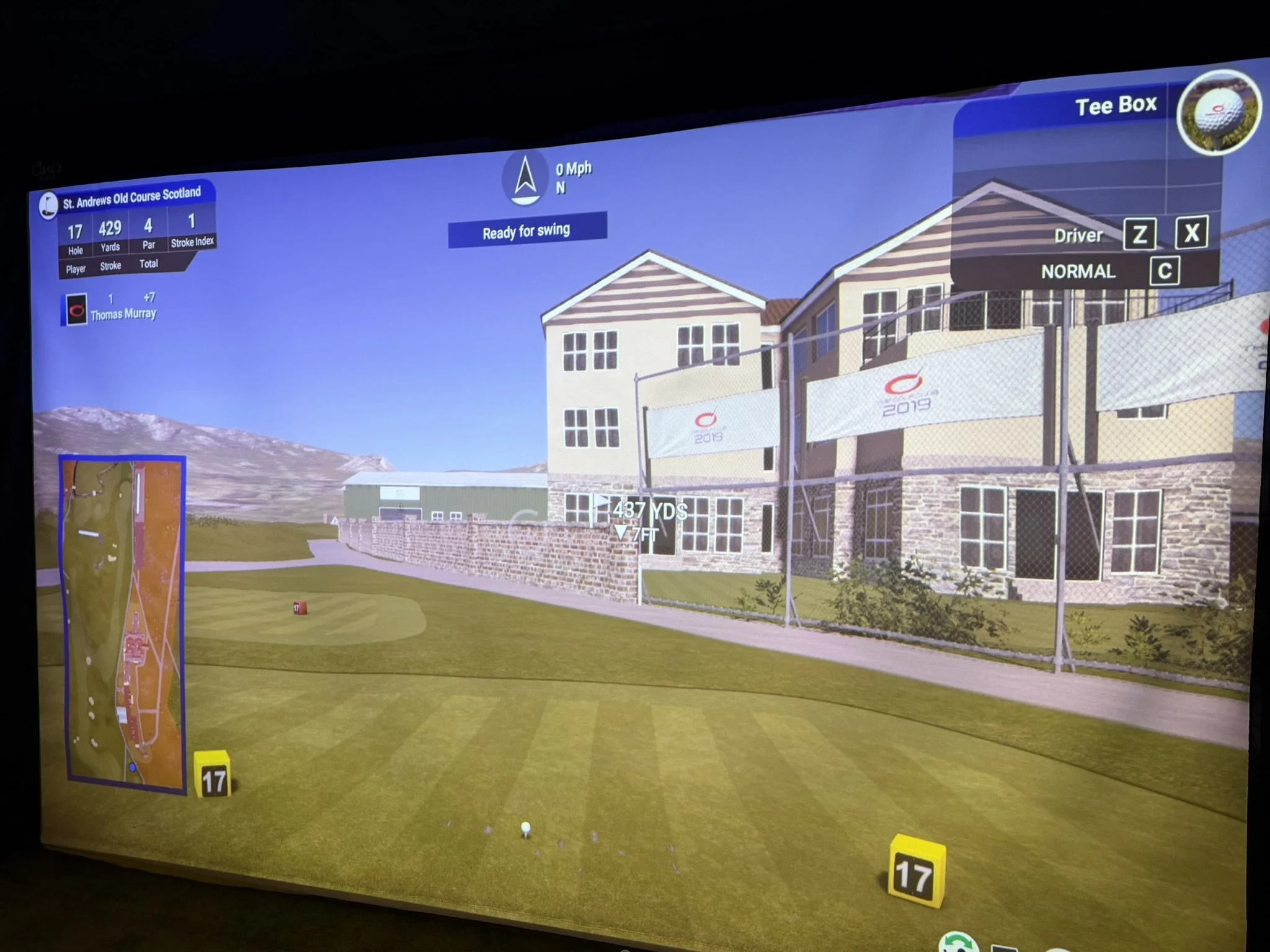
The iconic Road Hole at St Andrews on my ProTee VX simulator. Long before I ever stood on the 17th tee in Scotland, I had already played this hole dozens of times virtually. Seeing it on a screen and standing on it in person are very different experiences, but the familiarity helped build confidence.
The 17th Road Hole is one of the most famous and intimidating tee shots in golf. I'd played it countless times on my simulator, but nothing compares to standing on the actual tee at St Andrews and watching the ball trace its way down the fairway.
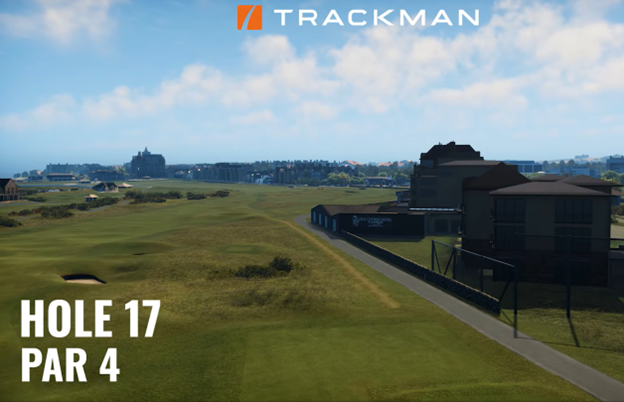
Another virtual look at the Road Hole, this time on TrackMan. I played it weekly all winter on a TrackMan IO.
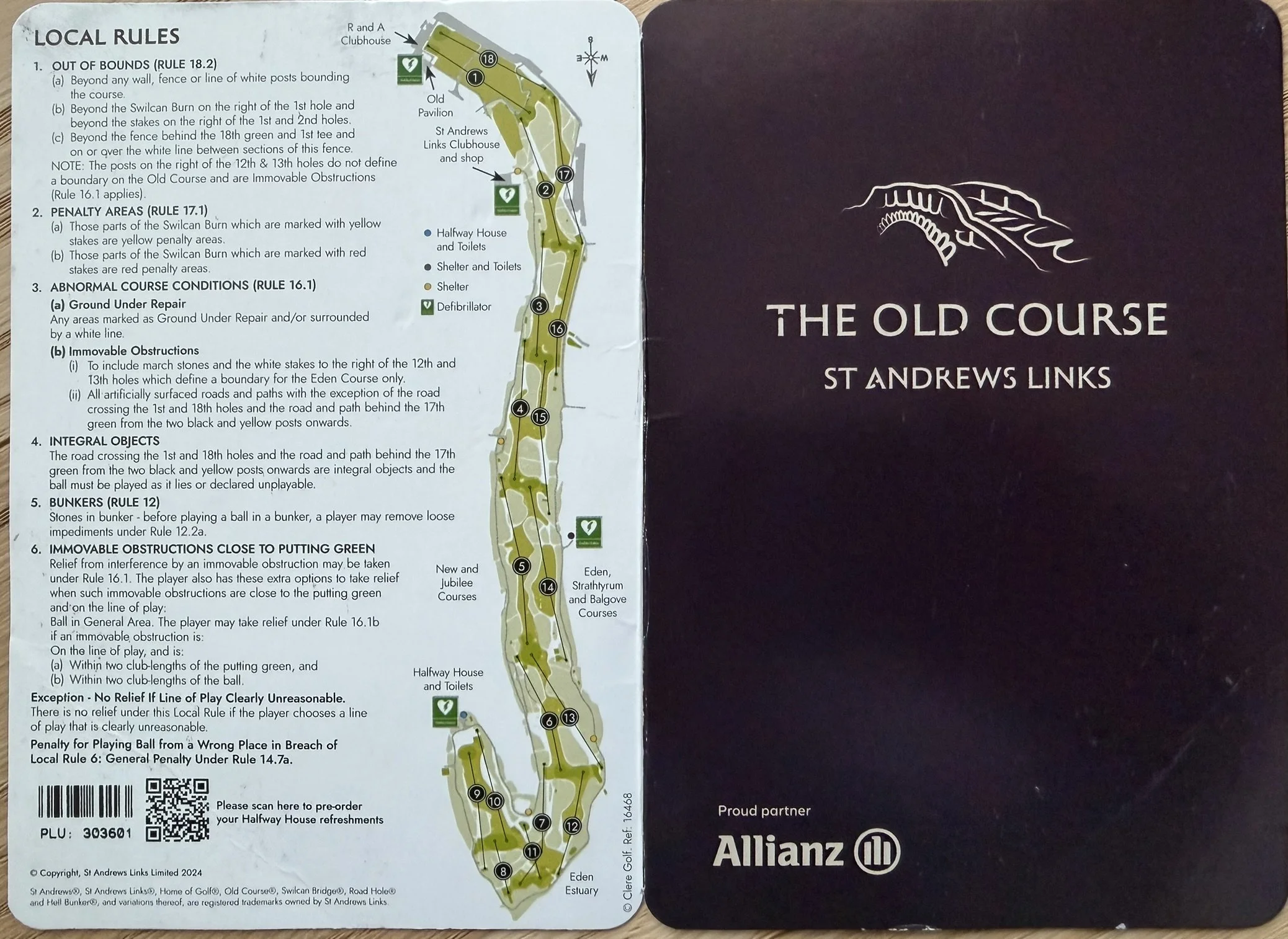
The Old Course routing is instantly recognizable to golfers around the world. After spending so much time studying and playing the course virtually, it was surreal to hold the scorecard in my hands and walk the same fairways I had only known through simulator golf.
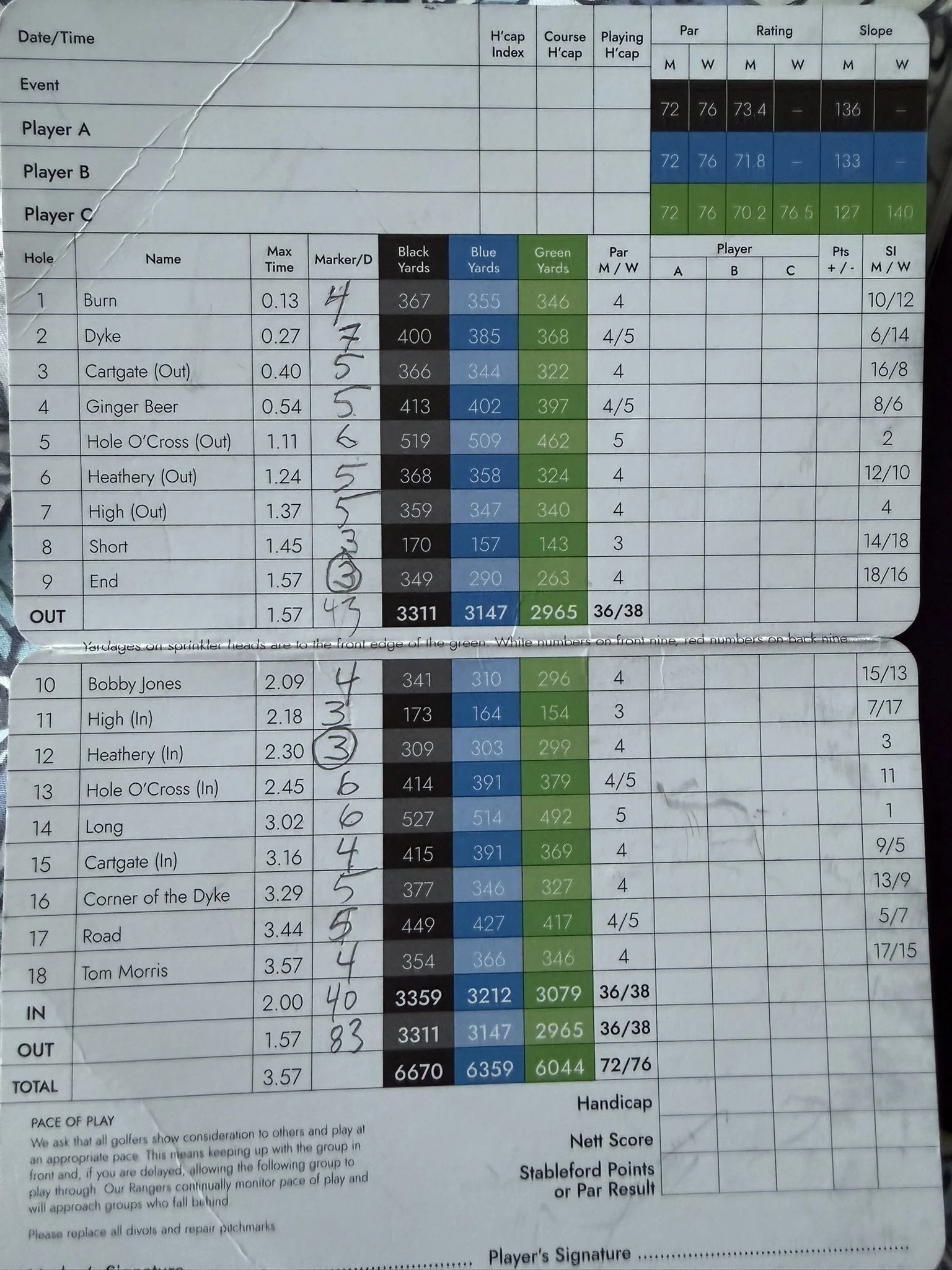
My scorecard from the Old Course at St Andrews. A round I'll never forget. More than the final score, it represents years of preparation, anticipation, and finally experiencing the birthplace of golf in person.
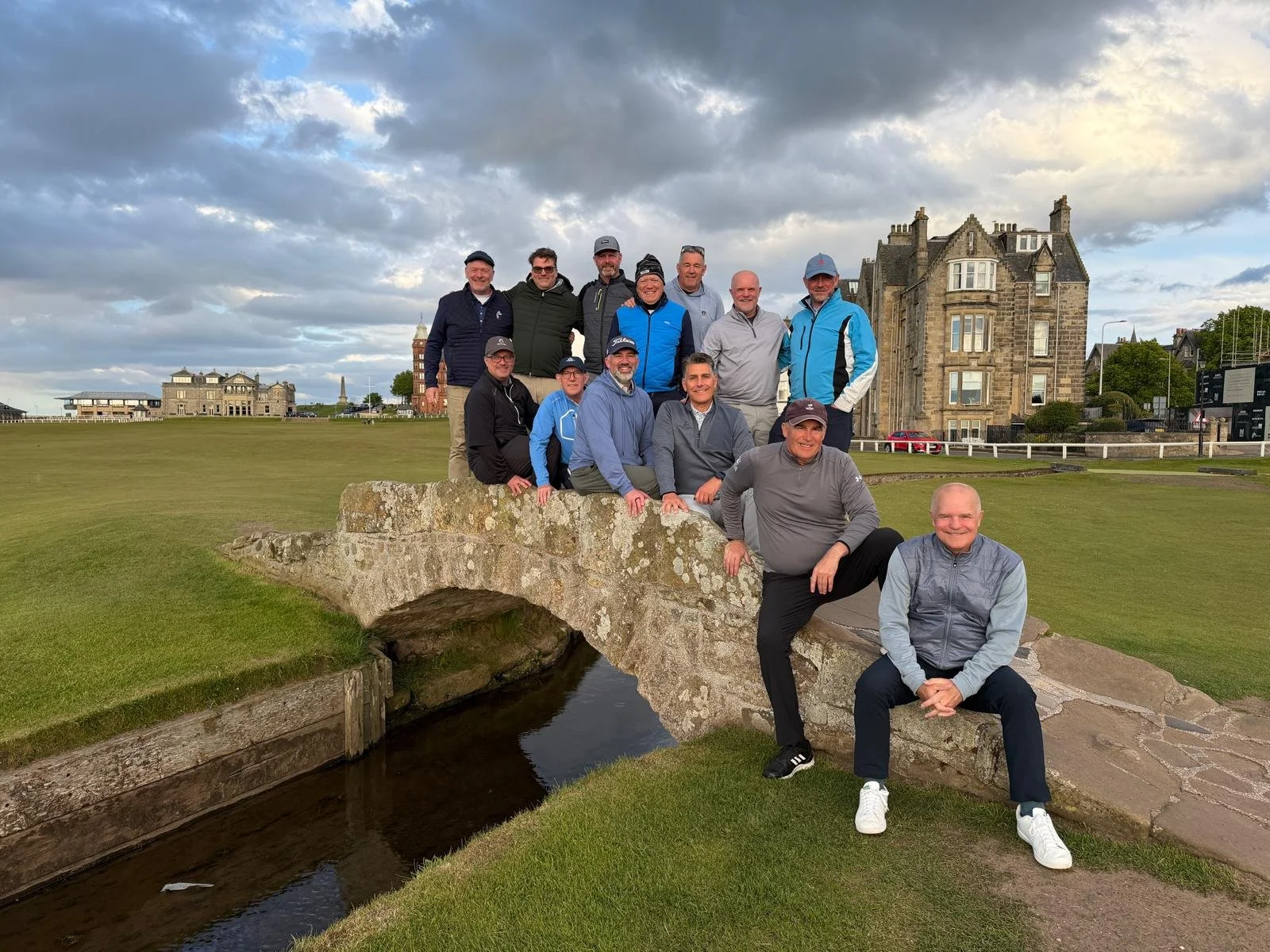
Standing on the Swilcan Bridge is a rite of passage at St Andrews. Some golf trips are about the courses. The best ones are about the people you experience them with.